Crystal healing · stone profile
Sunstone
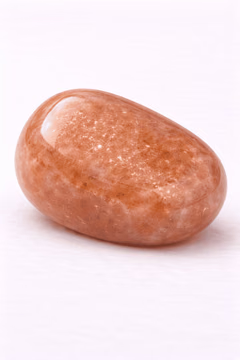
Sunstone is a orange stone traditionally linked to optimism, energy, confidence.
The essentials
- Family
- Feldspar
- Composition
- Feldspar (aventurescence)
- Crystal system
- Triclinic/monoclinic (depending)
- Hardness (Mohs)
- 6–6.5
- Color
- Orange, peach, glints
- Chakras
- Solar plexus, Sacral
- Elements
- Fire
- Zodiac
- Leo
Metal flakes, all facing the same way
Sunstone is a feldspar, most often an oligoclase from the plagioclase family, the same mineral clan as moonstone and labradorite. What sets it apart is what is inside it: microscopic platelets of hematite or goethite, all oriented the same way, that throw the light back in coppery flashes as the stone turns. The effect has a good name, aventurescence.
The historic deposits are in Norway, long the main source; before they were found the stone was rare and expensive. Today most material comes from India and Tanzania. Oregon has its own version, and a stranger one: its sunstones carry native copper, exceptional in a gem, shading from champagne to deep red. The state made it its official gemstone in 1987.
Sunstone, by tradition
Sunstone carries orange and peach flashes scattered with glints, a joyful light that tradition ties to the solar plexus and to creative drive. People link it to optimism, to the urge to move forward with verve, to that warmth that wakes up motivation. Its color calls to mind the first rays of morning, bright and full of promise. Keep it near as you wake or set it on your desk when you want to find your enthusiasm again. Hold it in your palm and picture your own joy radiating around you.
Affirmation“I radiate my joy.”
The Viking compass that probably was not this stone
The Icelandic sagas mention a sólarsteinn, a sunstone that let navigators find the sun’s position under an overcast North Sea sky. The story is a good one, and it fits the name so neatly that people routinely attach it to this feldspar. Honestly, researchers lean toward another mineral: Iceland spar, a transparent calcite that polarizes light, or possibly cordierite. The legend sails under a borrowed flag.
The Oregon stone has a history of its own. A local legend, often told in the region, holds that the blood of a great wounded warrior fell on these stones and gave them their color and their flashes. Tribes of the area traded them and, it is said, treated them as objects of value.
How to use sunstone
Morning, motivation; jewelry.
Cleansing
Smoke, sound; a quick rinse, then dry.
Charging
Brief gentle sun or moonlight; intention.
Common questions
- Sunstone and moonstone: what is the connection?
- They are two feldspars, cousins in the same mineral family. The difference is in the optical effect: sunstone glitters in coppery flashes (aventurescence), moonstone diffuses a bluish glow that seems to drift beneath the surface (adularescence). Tradition made a pair of them, radiance for one, interiority for the other.
- Can sunstone stay in the sun?
- Yes, and it is one of the few that genuinely does not mind direct exposure: its flashes come from stable metal platelets, not from a photosensitive pigment. A few hours of daylight suit it. Protect it from knocks and abrupt temperature changes instead.
- What makes Oregon sunstone different?
- Native copper inside the crystal, which is exceptional in a gemstone and produces colors from pale champagne through peach to a deep red, sometimes with a coppery schiller. It has been the official gemstone of Oregon since 1987, and good material is genuinely collectible.
- How fragile is sunstone?
- At 6 to 6.5 it handles clear or mildly soapy water without trouble. But like every feldspar it has cleavage planes, internal lines of weakness it can split along, so avoid knocks and skip the jeweler’s ultrasonic cleaner.