Crystal healing · stone profile
Carnelian
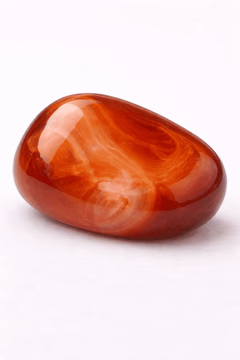
Carnelian is a orange stone traditionally linked to energy, creativity, confidence.
The essentials
- Family
- Chalcedony (microcrystalline quartz)
- Composition
- SiO₂
- Crystal system
- Trigonal (quartz)
- Hardness (Mohs)
- 6.5–7
- Color
- Orange, red
- Chakras
- Sacral
- Elements
- Fire
- Zodiac
- Aries, Leo
Iron, heat, and a very old habit
Carnelian is chalcedony, microcrystalline quartz, and its orange comes from iron oxides dispersed through the mass. The more iron and the more oxidized it is, the further the stone runs toward red-brown. Its darker twin, sard, is separated from it by shade rather than by any real boundary.
Here is the part that amuses mineralogists: heat deepens the color, and humanity has known it since antiquity. In Gujarat, rough stones have been laid out in the sun or gently baked for centuries to push a dull brown into a vivid red. Most carnelian sold today, typically from Brazil, Uruguay, India or Madagascar, is heated chalcedony. That is a lapidary tradition, not a deception.
Carnelian, by tradition
Carnelian is the stone of creative drive and the appetite to act. Tradition ties it to energy getting under way, to that joy of making and creating that warms the nerve to dare. Its orange-to-red color calls to mind a live ember, warm and frank. Keep it near before physical effort, a stretch of creative work, or speaking up. Hold it when you want to revive your vitality and enthusiasm, and let it invite you to take action with gusto, without overthinking it.
Affirmation“I take action with joy.”
The stone that wax will not stick to
Few stones have a résumé this long. Beads of it were found in the royal tombs of Ur, around 2600 BC. Egypt paired it with lapis lazuli and turquoise in the classic red-blue-green of royal jewelry, and cut it into beads, amulets and inlay from predynastic times onward. Mesopotamia engraved it into cylinder seals, and Rome into intaglios, for a very practical reason: hot sealing wax does not adhere to its polished surface.
Islamic tradition holds that the Prophet Muhammad’s seal ring was set with carnelian, which made it a beloved stone across the Muslim world. Kunz, gathering beliefs in 1913, records the ones that follow it out of antiquity: that it settles anger, and that it lends courage to the voice.
How to use carnelian
Before sport, creative work, speaking up.
Cleansing
A rinse, smoke, sound.
Charging
Gentle sun, moonlight; intention.
Common questions
- Is my carnelian dyed or heated?
- Heating is close to universal, undetectable by eye, accepted since antiquity, and it does not change what the stone is. Dyeing is rarer and sometimes betrays itself by color pooling in fractures. On a piece you care about, a gemologist can settle it; on a tumbled stone, it hardly matters.
- What is the difference between carnelian and red jasper?
- Both are iron-colored chalcedony, but hold them up to the light: carnelian stays translucent, red jasper is fully opaque. Carnelian also runs toward a luminous orange, jasper toward matte brick red. In the hand, jasper feels denser and flatter.
- Is carnelian easy to care for?
- Unusually so. It is hard, water does nothing to it, and its color, often already stabilized by heat, tolerates light better than most colored stones. Rinse it, dry it, wear it daily. Tradition likes charging it in morning sun, which fits its whole warm-ember symbolism.