Crystal healing · stone profile
Pyrite
Pyrite is a metallic gold stone traditionally linked to confidence, energy, protection.
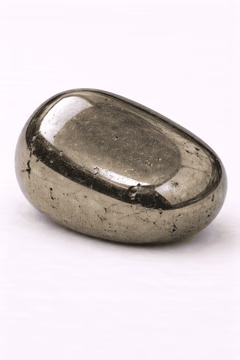
The essentials
- Family
- Sulfide
- Composition
- FeS₂
- Crystal system
- Cubic
- Hardness (Mohs)
- 6–6.5
- Color
- Metallic gold
- Chakras
- Solar plexus
- Elements
- Fire/Earth
- Zodiac
- Leo
Cubes nobody carved
Pyrite is an iron disulfide that crystallizes in the cubic system, and it does so with a geometric precision that is rare in nature: flawless cubes, octahedra, twelve-faced pyritohedra. The cubes of Navajún, in Spain’s La Rioja, come out of their marl matrix with edges as straight as a ruler. No polishing, no cutting, just the chemistry of the crystal. Peru, Elba and China yield other spectacular pieces.
Its brassy luster earned it the nickname fool’s gold, but the two separate quickly. Gold is soft and malleable; pyrite is hard and brittle. The classic check is the streak test: rubbed on unglazed porcelain, pyrite leaves a greenish black mark where gold leaves a yellow one.
Pyrite, by tradition
Pyrite carries the golden shine of metal, a frank light that tradition ties to the solar plexus, to confidence and inner radiance. People link it to the courage to move toward your goals while keeping a protective shell around you. Its warm color calls to mind a sun that warms without burning, the quiet assurance of someone who knows where they’re headed. Set it on your desk on the days you want to feel motivated and determined. Look at it before a challenge, like a reminder that you can shine in your own way.
Affirmation“I shine and I protect myself.”
The fire stone, and the mirrors of the Americas
Long before it was a collector’s curiosity, pyrite was a tool. Struck against flint or steel it throws sparks, and people have been lighting fires with it since prehistory. As late as the sixteenth century it still armed wheellock firearms, whose mechanism scraped sparks from a fragment of pyrite. Its Greek name, pyritēs lithos, says exactly that: the fire stone.
In pre-Columbian America, polished pyrite mirrors have been found in burials from Mexico to Peru, and are thought to have served for adornment as much as for divination. The prospectors of the gold rushes, meanwhile, learned the hard way that a golden glint in the pan makes no fortune. Fool’s gold built its legend on their disappointment.
How to use pyrite
Desk, goals, courage.
Cleansing
Sound, smoke; a dry cloth.
Charging
Brief gentle sun or moonlight; intention; keep from moisture.
Common questions
- Can pyrite go in water?
- No, and here the rule is about as clear as it gets. Pyrite is an iron sulfide, and moisture oxidizes it: a piece that gets wet regularly dulls, rusts in patches and can eventually crumble, something collectors call pyrite decay. Dry cleansing only, then a soft cloth.
- How do I tell pyrite from gold?
- Three quick checks. Hardness: pyrite scratches copper, while gold is soft enough that a fingernail almost marks it. Shape: cubes and striated faces mean pyrite, never gold. And the streak on unglazed porcelain, greenish black for pyrite, yellow for gold.
- Why is my pyrite crumbling?
- Humidity, almost certainly. Pyrite decay is a real and progressive reaction: the sulfide oxidizes, the surface powders and the piece can break down over years. Keep it dry, away from bathrooms and windowsills that catch condensation, and dust it with a dry cloth rather than washing it.
- Are Spanish pyrite cubes carved?
- They are not, and it is the first question everyone asks. The cubes from Navajún grow that way in soft marl, which lets the crystal build clean faces without obstruction. What you are holding is untouched crystal habit, which is far more impressive than any cutting would be.