Crystal healing · stone profile
Citrine
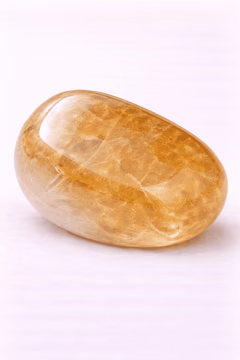
Citrine is a yellow stone traditionally linked to optimism, energy, confidence.
The essentials
- Family
- Quartz (yellow)
- Composition
- SiO₂
- Crystal system
- Trigonal
- Hardness (Mohs)
- 7
- Color
- Yellow, honey
- Chakras
- Solar plexus
- Elements
- Fire
- Zodiac
- Leo, Gemini
Most citrine started out purple
Citrine is quartz colored by iron, like amethyst; what separates them is the state of that iron and the thermal history of the crystal. Genuinely natural citrine, usually a pale and clear yellow, is scarce. Zambia, Madagascar, the Urals and Brazil produce it.
The overwhelming majority of citrine on the market is Brazilian amethyst heated to somewhere around 450 to 500 °C, at which point the violet swings over to orange. The classic tell is a burnt, almost reddish orange with a whitish base on geode points. There is nothing wrong with heated material, and the practice is old and stable. An honest seller simply says so.
Citrine, by tradition
Citrine is the stone of a joyful push forward. Tradition links it to confidence waking up, to that easy enthusiasm that makes you want to get moving toward what matters. Its honey-yellow hue calls to mind full-morning light, soft and alive. Keep it on a desk, wear it as jewelry, invite it into a ritual where you set your goals. Hold it for a moment when you want to revive your drive, and let it remind you that you’re allowed to move toward what you care about.
Affirmation“I move forward with confidence and enthusiasm.”
The stone that spent centuries being called topaz
The name comes from the Latin citrus and settles into use from the sixteenth century, largely to separate this yellow quartz from topaz. The two had been muddled for generations, and a good number of the “topaz” pieces in antique jewelry cases are citrine wearing the wrong label.
It has had two clear moments in fashion. Victorian Scotland set it into kilt brooches and dirk handles, part of the whole nineteenth-century enthusiasm for Highland dress. Then the 1930s and 1940s came, and Hollywood and Art Deco jewelers fell for big golden stones in heavy settings. Folklore, meanwhile, made it the merchant’s stone, kept in the till for a prosperous shop, which is why it now sits on so many freelancers’ desks.
How to use citrine
Jewelry, desk, a goal-setting ritual.
Cleansing
A quick rinse, smoke, sound.
Charging
Gentle morning sun or moonlight; avoid harsh heat.
Common questions
- How do I tell natural citrine from heated amethyst?
- Natural material tends toward a pale or golden yellow, even in tone and often clear. Heat-treated stone runs to burnt orange, sometimes with a milky base and banded color. Price and origin help too: Zambia and the Urals point to natural. Ask the seller. A good one will answer without flinching.
- Is heated citrine fake?
- No. It is real quartz, real amethyst that has changed color, and the treatment is permanent and stable. It is a matter of disclosure rather than authenticity: you deserve to know what you are buying and what it should cost, and heated stone should not be priced as rare natural citrine.
- Can citrine be left in the sun?
- Briefly. It is hard, water-safe quartz, and morning light suits it. But the color comes from iron, and prolonged ultraviolet can pale it just as it pales amethyst. Short early light, or moonlight if you would rather be careful. Keep it off the car dashboard.
- Does citrine attract money?
- That is the merchant’s stone legend, and it is a charming one. Nothing measurable backs it: when Christopher French put real crystals and indistinguishable copies in volunteers’ hands in 2001, both sets reported the same things. What citrine can do is sit where you work and keep reminding you of the momentum you decided to cultivate. Abundance stays a human job.